

Douglas Newby Insights
Neighborhoods, Architects, Architecture, Design, Dallas, and Organic Urbanism
Allison Opening
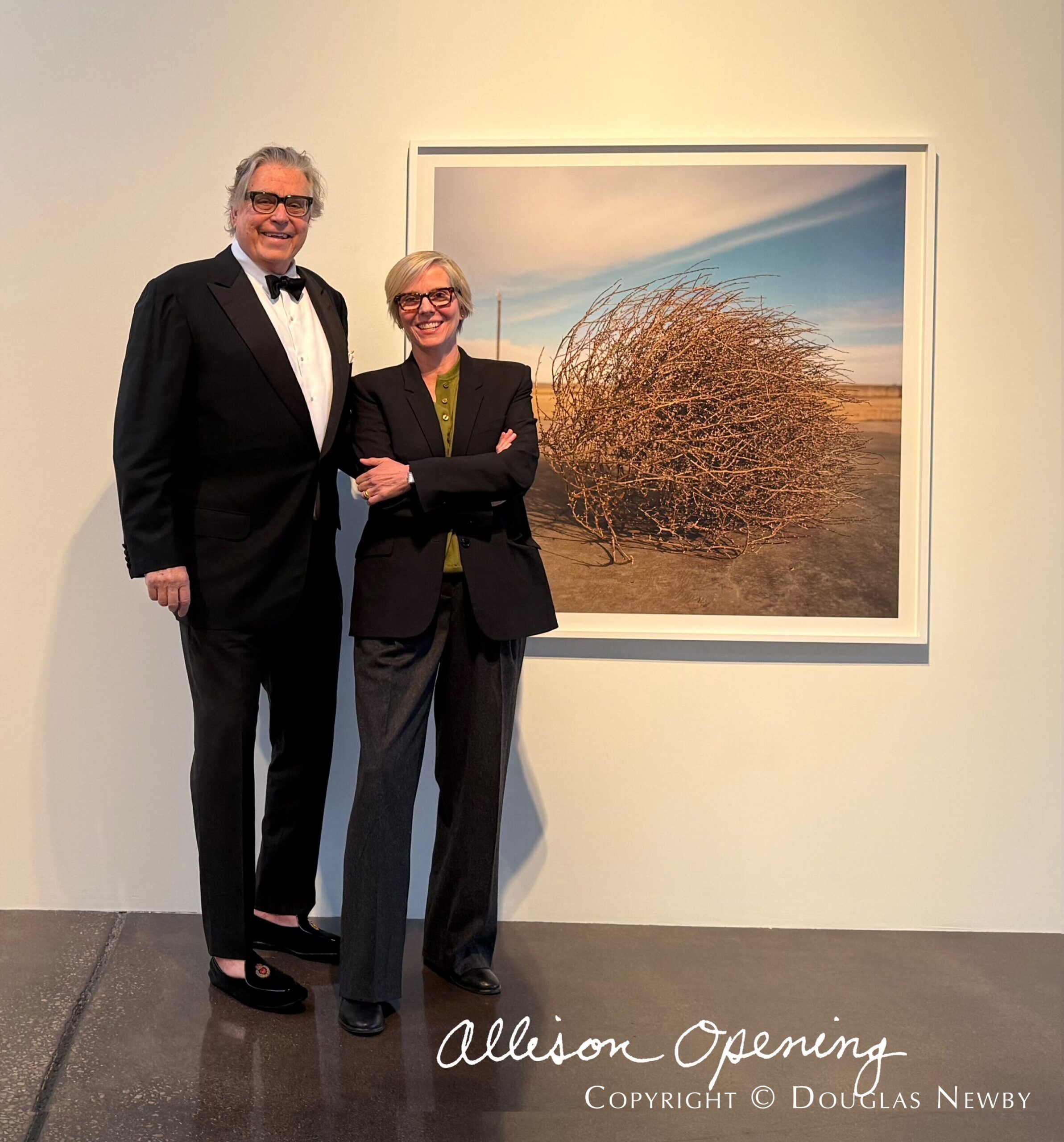
I want to see art that is visually appealing. This does not mean it has to be pretty, but it must have a compelling composition or colors or patterns.
Allison V. Smith’s (@allisonvsmith) exhibition at @barrywhistlergallery delighted me with beautiful photographs of Texas and also made me think about how I view art in galleries and museum exhibitions. I realize this is much the same way I look at houses. Whether modern or historic, simple or ornate, they must have balance, proportions and context.
Allison’s photographs also prompted a revelation. Whenever I see an exhibition, I find myself thinking about what the artist is revealing about that time. When I go to a new city, I like to start in the center and move outward and see how the neighborhoods and architecture show time like the rings of a tree. There’s a greater appreciation when one knows how a home was inspired by its time and interpreted by the architect.
When I read the notes beside a painting, I find myself drawn to the biography of the artist. The more I know about the artist, the more I know about the art. History to me is about people and places. If I know those things, I can understand the events of the time.
Allison’s background helps me understand where her artistic vision comes from. Just as many famous writers began in advertising or journalism, Allison began her photography as a photojournalist. She is still sought out by The New York Times or The Times of London for important stories on people and places. A photojournalist is able to catch a mood, which Allison does so well when she is photographing an object or a place.
In addition, Allison’s whole life has been immersed in aesthetics. Her grandfather, Stanley Marcus, was the greatest merchant of fashion and design in the 20th century. I even have a framed photograph that Stanley Marcus shot in Italy 70 years ago.
When you see the show, you will love the photographs and have a better understanding of Dallas and Texas.
And as I left the gallery, I hit on why I like the tumbleweed series so much. The tumbleweed in Allison’s photograph expresses freedom—a tumbleweed that is free to go anywhere and end up nowhere.
Book Club With View
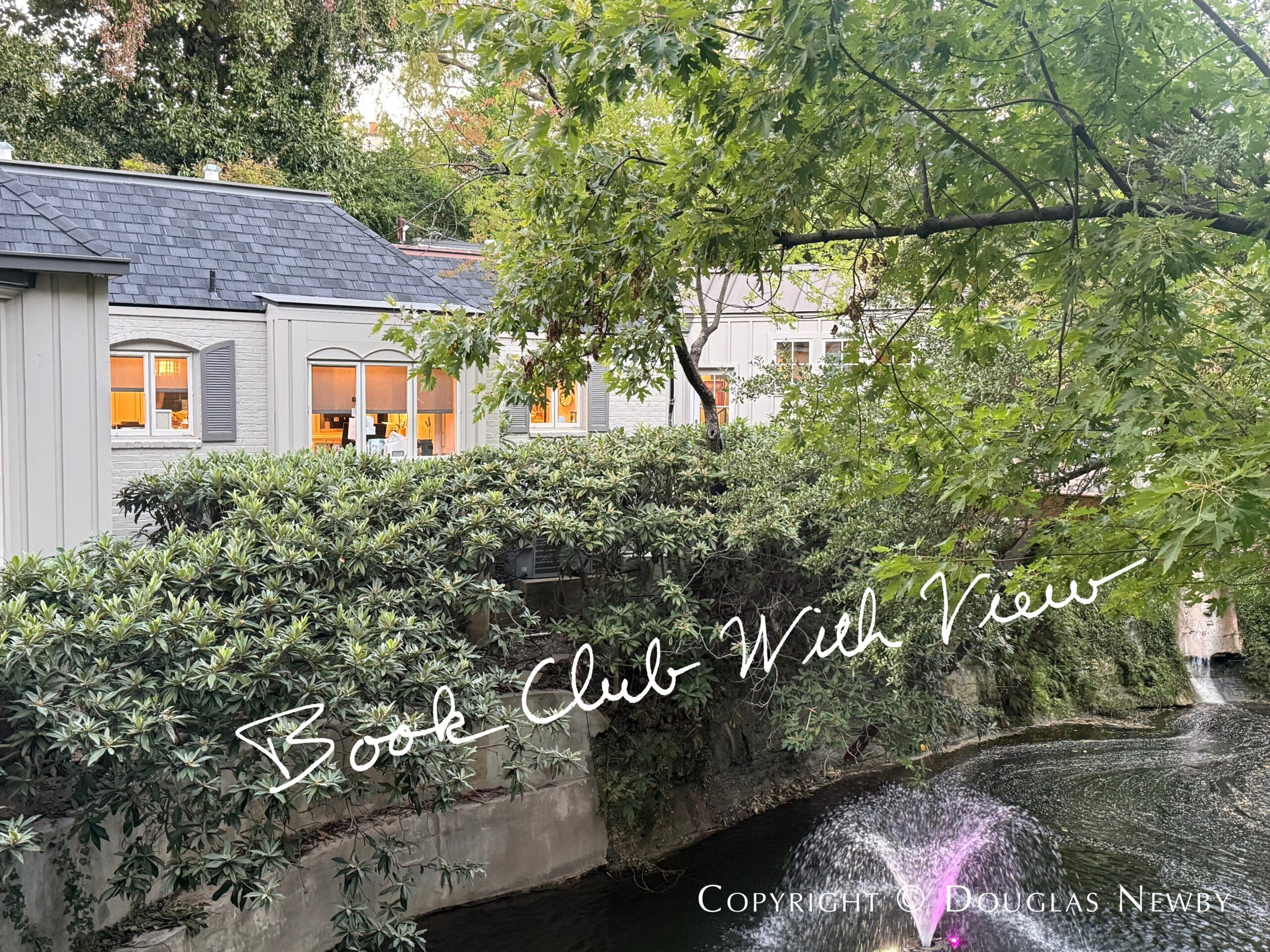
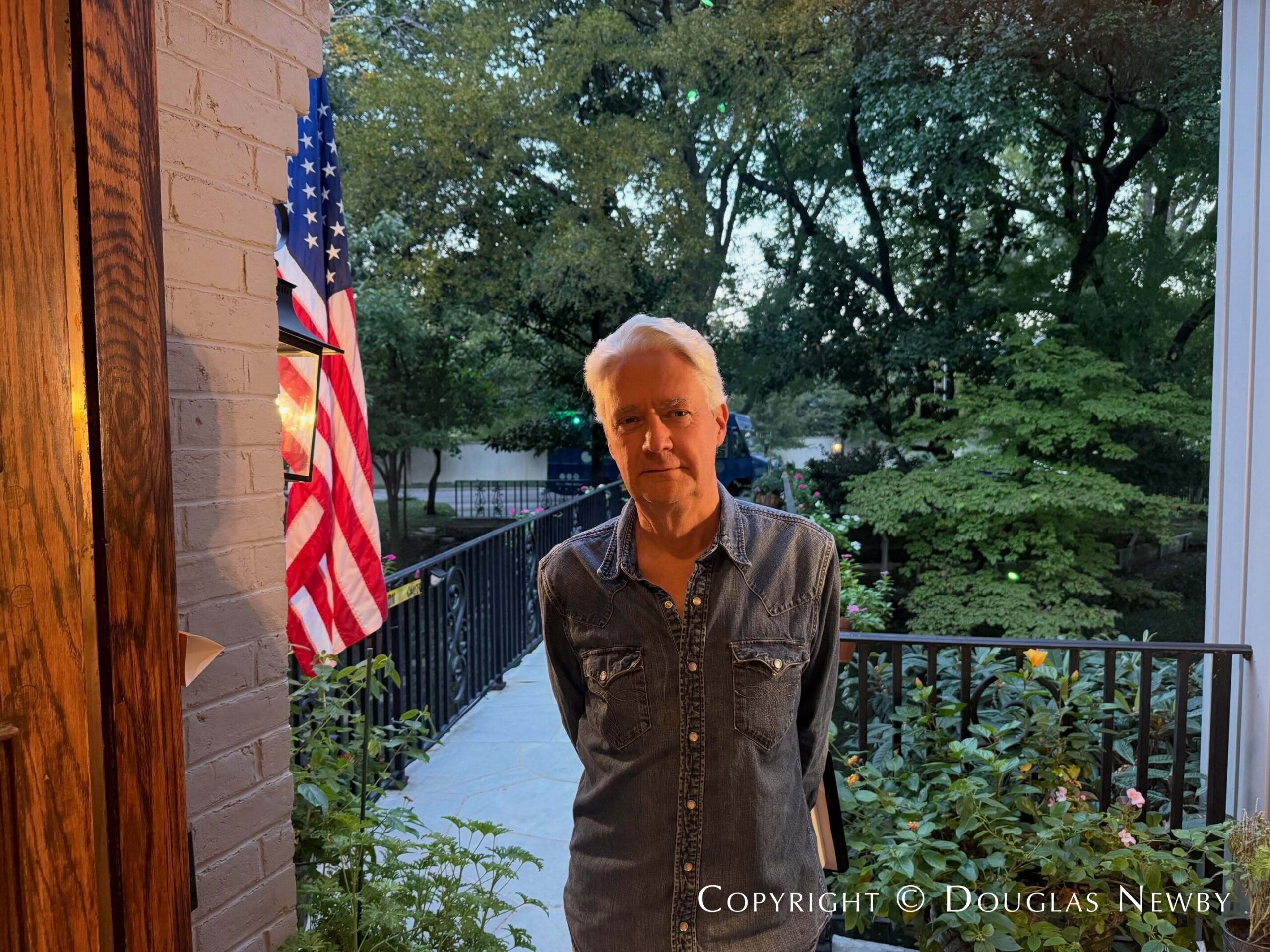
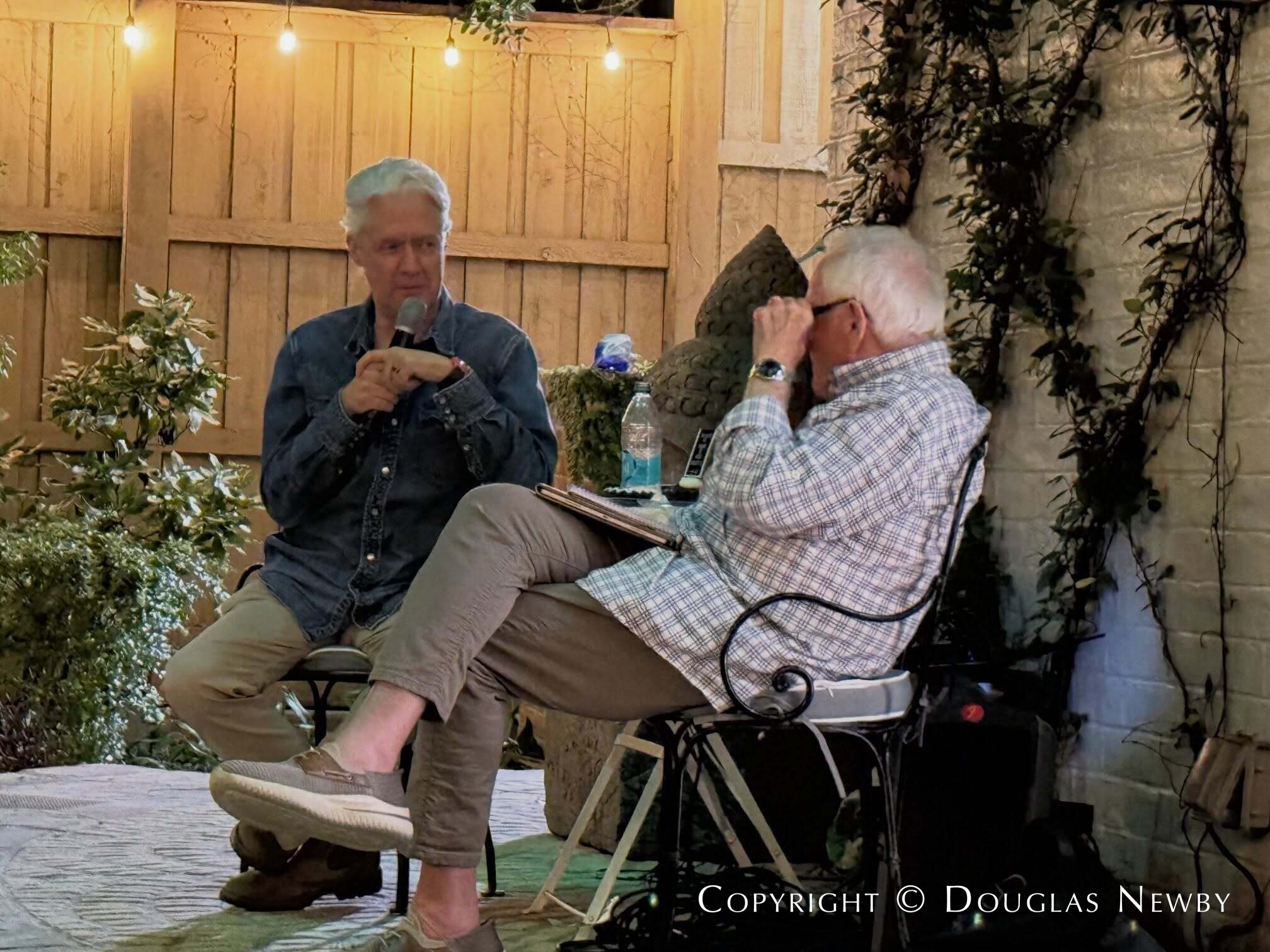
There is something to be said for arriving at a book club dinner and conversation with Dallas mystery writer Harry Hunsicker (@harryhunsicker) by crossing a footbridge. A creek meanders behind the estate homes in the Mayflower Estates neighborhood. On the other side of the footbridge is the French-style home of Dr. Buz Burkhead (@dr.buz1), designed by mid-century modern architect Robert Johnson Perry.
Part of what I enjoy so much about “The Life and Death of Rose Doucette” is the way the Dallas neighborhoods and places I know help propel the plot. Sitting next to Harry at dinner and talking with him about his writing, I began to understand what else draws me to his mysteries.
The undertow of Highland Park aristocracy leads to the underbelly of Dallas. I sense it in Harry’s voice and plot. Being raised in Highland Park allows Harry to look at the grit of other Dallas neighborhoods and places with a fresh eye. Had he grown up in those places, familiarity might have dulled his senses. I think that fresh eye gives his mysteries their curiosity and emotional intensity.
After dinner, former investigative reporter Byron Harris continued the conversation with Harry about “The Life and Death of Rose Doucette” and “Mother May I.”
Creativity converged at 10221 Hollow Way Road. We see Robert Johnson Perry’s interpretation of a French-style home, much as we see mid-century modernist Howard Meyer’s interpretation of Georgian homes. In both, we see the emphasis on the site and the proportions. We see the constant eruption of Buz Burkhead’s creativity that cannot be suppressed. We see the creativity of Dallas author Harry Hunsicker. We see the creativity of people curious about Dallas, books, authors, neighborhoods, and the viewpoints of others. Dallas is a creative city, and it was well expressed that evening in this home and by the people Buz brought together.
Thank you, Buz.
#MayflowerEstates #RobertJohnsonPerry #DallasArchitecture #TexasAuthors #CrimeFiction
Tremont Artist
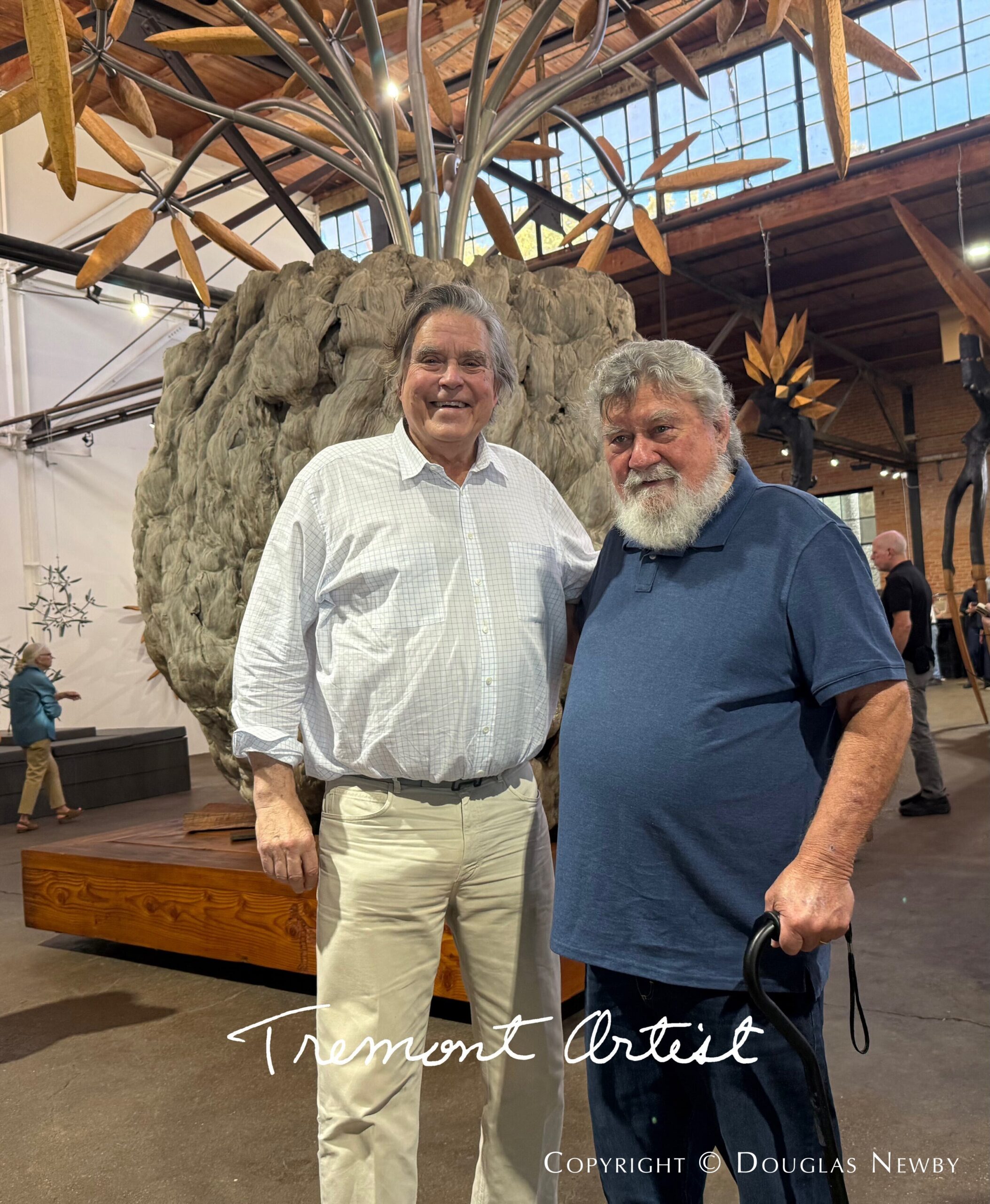
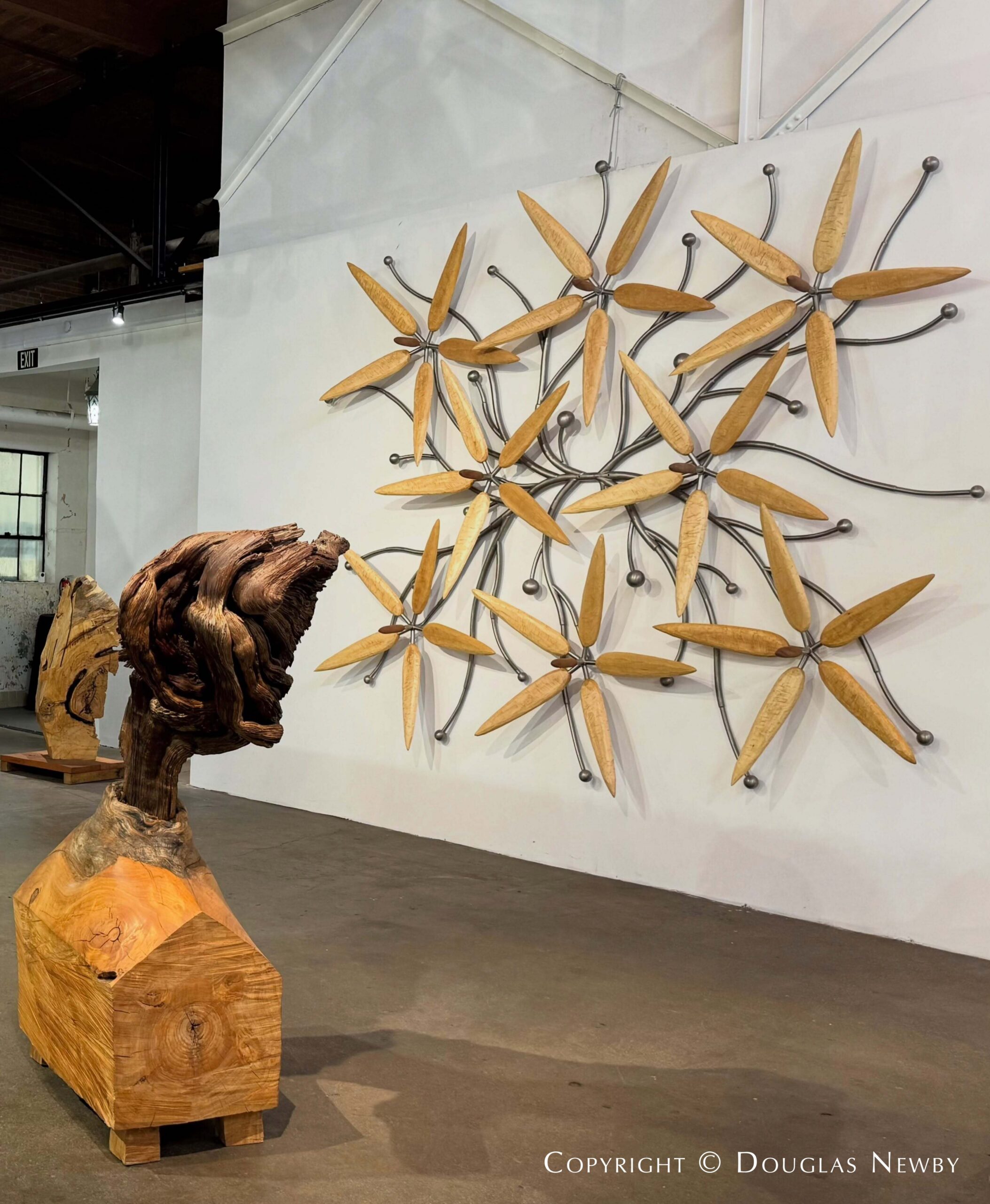
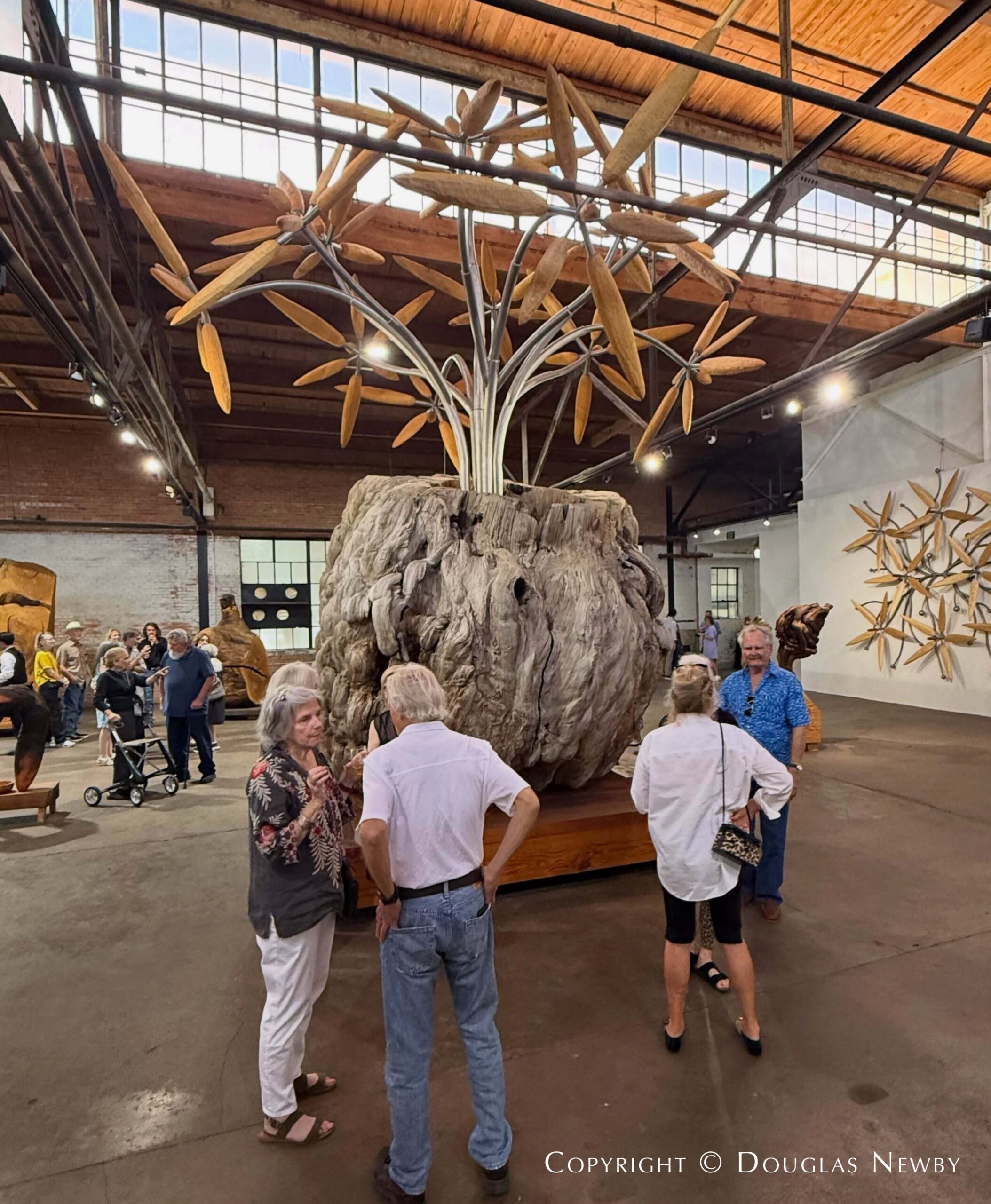
James Surls is a Texas artist with a national platform, with work in several New York museums and others across the country. I, too, have seen his work in many of these museums and love his current show, James Surls: From the Old Growth, at Passage Arts @passageartsdallas
However, my thoughts and admiration of James Surls the artist will always return to Tremont in Munger Place.
Munger Place was identified by the city as the worst neighborhood in Dallas—as a result, the perfect environment for an artist like James, who was teaching at SMU. James was a creative force and a magnet for other artists and art patrons.
James introduced me to Munger Place and Tremont, where I bought a home down the street from him with his encouragement.
This gave me a front-row seat to artists including David McManaway, David Bates, Dan Rizzie, John Alexander, and Roy Fridge. Roy lived in my garage apartment. A dozen other artists lived on Tremont or around the corner, including Frances Bagley.
The “Tremont artists” could be considered a school, or at least a major influence on Dallas and Texas art. There is an inevitable cross-pollination of ideas when so many artists live on a block or two with an open-door policy to their homes and studios. I was at James’s house when the idea of an art gallery for women first came up, which became DW Gallery.
Artists generated an excitement and vibe that attracted urban pioneers. James did this when Swiss Avenue still had only a handful of urban pioneers.
From James I learned about art. I learned about ideas. I learned about the momentum and energy someone can create with their vision and persistence.
I recall when James sold his first chainsaw-carved small, long, low table for $500. His current show has a large piece offered for sale at $500,000. Just as the prices of James Surls’s work have gone up 100 times, the prices of houses in Munger Place that he first discovered have gone up 100 times.
James Surls is a visionary and creator. Thank you, James. @jamessurls
845 S. Trunk Ave.-Kirk Hopper’s renovated 1919 industrial warehouse.Through April 17
#JamesSurls #MungerPlace #DallasArt #TexasArt #PassageArts
Homes Worth Preserving
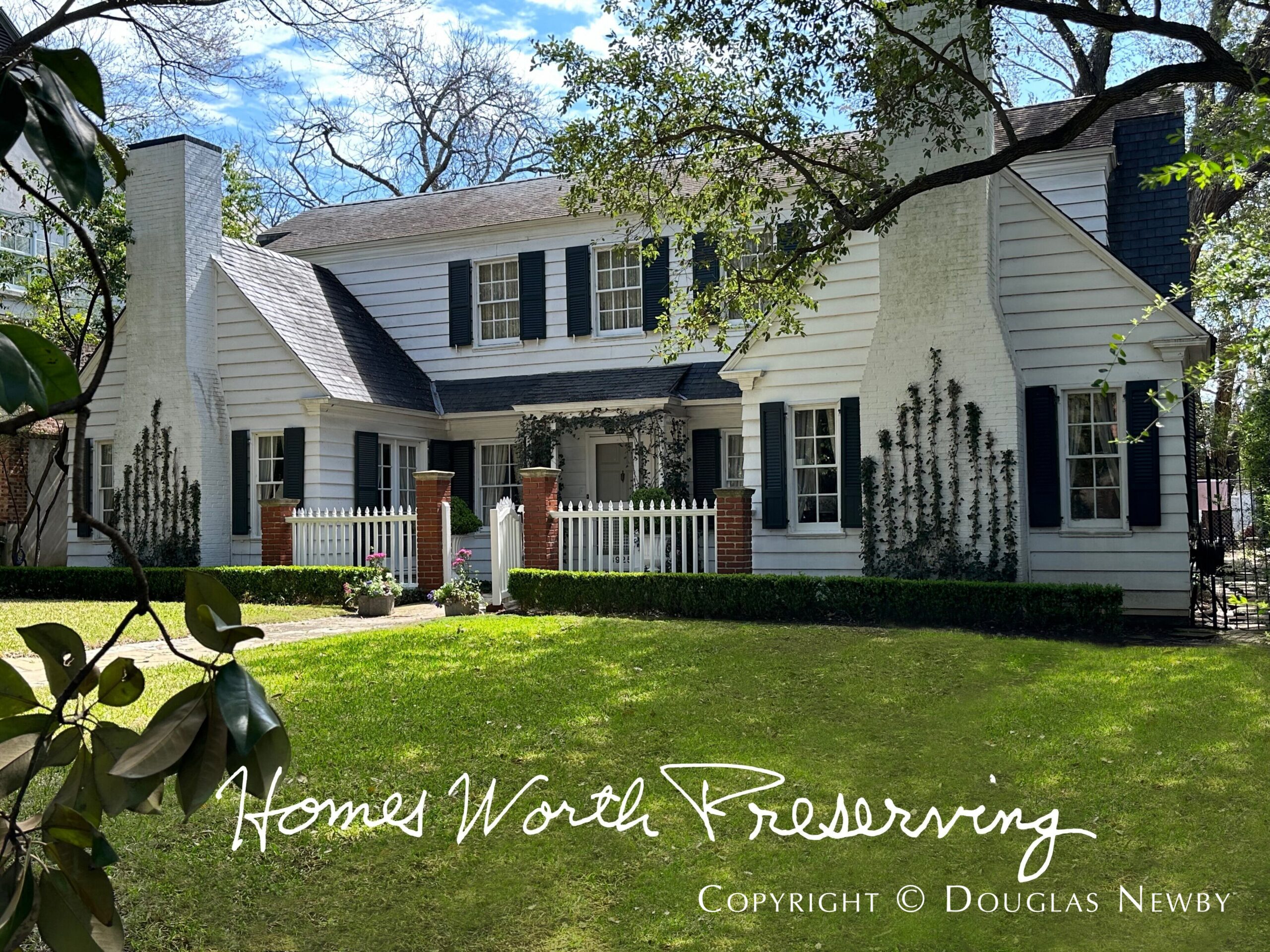
Five of the ten iconic Dallas homes D Home identified as worth preserving are homes I have previously sold. On three of those, I had initiated preservation deed restrictions.
It was also interesting to see modern architects nominate traditional historic homes, and traditional architects nominate modern homes. As I have always said, good architecture is good architecture, regardless of a home’s style or age.
The Hal Thomson home pictured here is a wonderful example. Designed for his own family, it was nominated by modern architect Todd Hamilton. It is also one of the homes I sold with preservation deed restrictions.
Thank you to Jessica Otte, @jessica.j.otte, editor of D Home, and the architects for this compelling approach to discussing homes worth preserving.
I also wrote an article on DouglasNewby.com sharing my perspective on these homes and the strategies we used to help save them.
#ArchitecturallySignificant #HistoricPreservation #DallasHomes #DallasArchitects #HalThomson
Modern Home – Traditional Pursuit
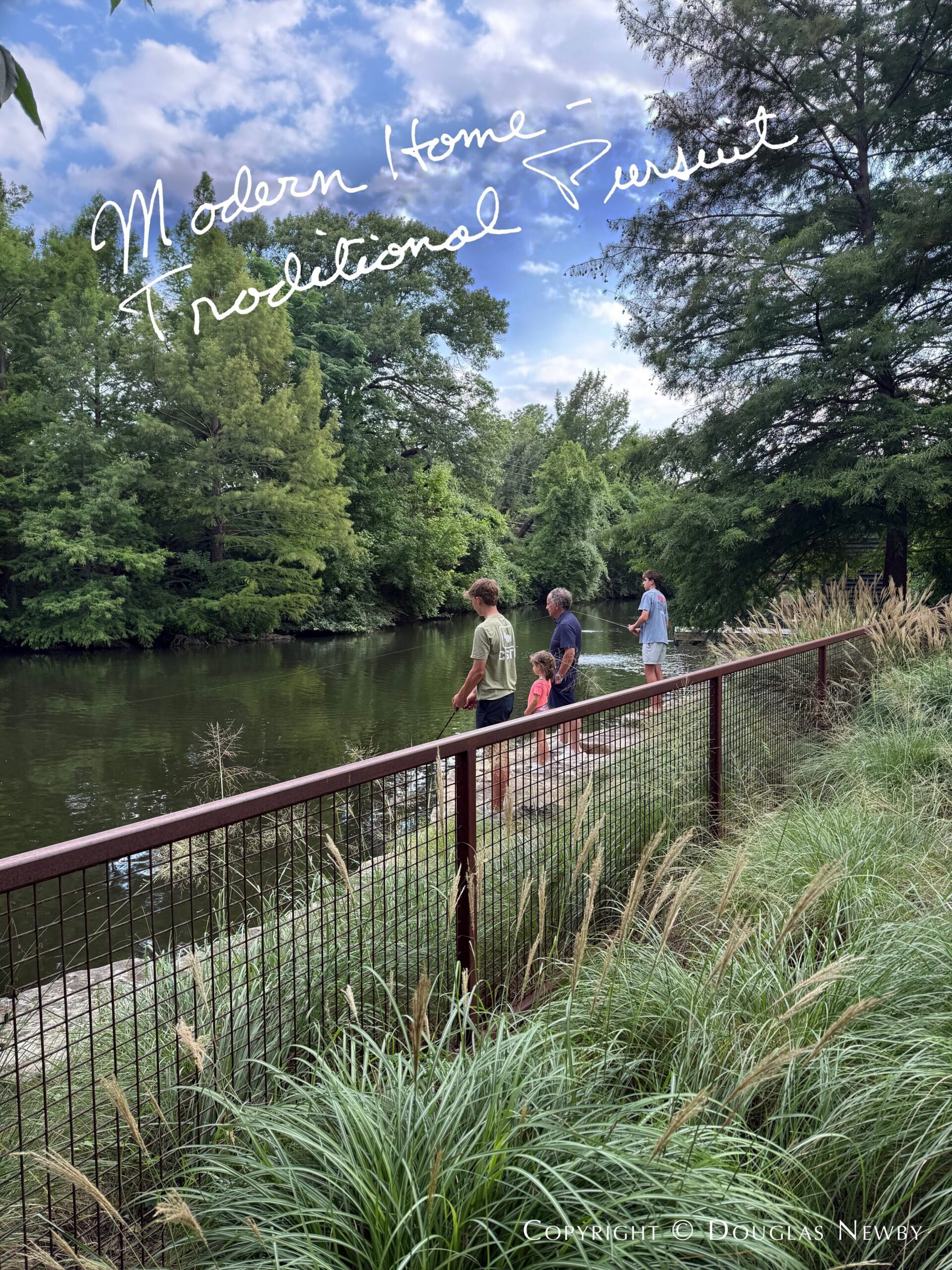
Here is a client who has owned architecturally significant modern homes across the country—some featured in national publications and discussed at architectural forums. When asked to find this client an architecturally significant Dallas modern home in Preston Hollow—the bar was high.
The success came with an architect-designed Texas modern home by David Stocker, with indigenous materials, open sightlines allowing sunlight to fill the home, and views to the terraces, pool, lawn, garden and spring-fed linear lake. Even more compelling than the modern architecture was the draw to nature and the appeal of one of the most traditional pursuits—fishing at the edge of one’s property on a sunny summer day.
*Modern Home-Traditional Pursuit @shmarchitects @colleenwaguespack #DallasModernHome #PrestonHollow #DallasArchitecture #DallasNeighborhoods #ArchitecturallySignificantHomes
Dilbeck Prevails

It is a victory whenever a historically and architecturally significant home is sold to a new owner who will restore and renovate it. Every historic home that has not been extensively renovated or expanded is in danger of being torn down. This danger is especially acute when a Charles Dilbeck-designed home is only 1,800 square feet and is on a substantial lot in Highland Park.
This Dilbeck prevailed over a builder’s overtures for a lot sale and demolition. I have said that fabulous homes are torn down not because no one wants them, but because owners and real estate agents are tempted by an offer that comes in before the home is on the market or in the first two days. Builders and preservationists have too often said there is little hope for a historic home to be saved in Highland Park. Owners think they are getting a quick, sure sale, and agents do not have to do any work except provide the lot dimensions.
My contravening argument is that numerous buyers dream of owning a historic home. They need more time and information to evaluate it, but they are often willing to pay more for the lot and house than a builder or investor would pay just for the lot.
This Charles Dilbeck-designed home is a perfect example. I received a substantial offer from a builder the first day it was on the market. My clients turned it down. Before it went on the market, we spent a month preparing information, floor plans, and photographs to give homebuyers the opportunity to understand the home and its value.
There were 20 showings, and it took a month for the right offer to come in, much higher than the builder’s lot purchase offer. The cash buyers, who are restoring and accentuating the original Dilbeck features, closed in seven days. This made the closing date not that different from a customary 30- to 45-day builder closing.
Most encouraging was that three other buyers were devastated that they deliberated too long and the house got away. Yes, there is a pool of buyers who desire a historic home in Highland Park. This Charles Dilbeck-designed home has the best new homeowners.
#Dilbeck #Dallas #HighlandPark #ArchitecturallySignificant
Celebration

Can anyone remember a time when Lee Cullum did not represent the best of Dallas?
Lee is widely admired and regarded with affection—and with good reason. Lee brought great insight into Dallas, business, and its leaders as host of CEO on KERA.
She made Dallas proud when she appeared on PBS NewsHour with Jim Lehrer and on NPR’s All Things Considered.
She shaped opinions as editorial page editor of the Times Herald and as a columnist at The Dallas Morning News.
Her international reach is legendary as a senior fellow at the Tower Center and through her service on the Council on Foreign Relations.
But maybe she has touched and dazzled us most as an interviewer and moderator on subjects ranging from politics and city affairs to art, leadership, culture, Dallas, and international affairs.
We see her photographic memory at work as she quotes politicians, philosophers, poems, or religious passages spontaneously in response to an answer—or to pose her next question. And she does so with a melodic voice, aristocratic diction, and a wonderful sense of humor.
Lee Cullum is the ultimate Dallas diplomat. Anytime Lee is in the room, you know it is a celebration.
Urbanity and Bucolicity

One of the virtues of a well-designed modern home is its ability to make an urban site feel connected to nature.
This view is between two architect-designed homes on Park Bridge Court. One was designed by architects Smitharc and the other by architect Ken Burgess. Both occupy zero-lot-line sites along the Katy Trail and Turtle Creek corridor, demonstrating how thoughtful design can create privacy while still embracing a remarkably bucolic setting.
The photograph also reminds me of advice from a brilliant designer friend Michael Lee who suggested a Mercedes estate wagon for me. Comfortable, robust, and understated, it has long been the everyday car of choice for many serious car collectors.
In this setting it seems perfectly at home—part urban sophistication, part countryside practicality.
The architecture, landscape, and even the wagon all share a similar quality – they are designed to be enjoyed every day rather than admired only on special occasions. * Urbanity and Bucolicity
#TurtleCreek #ParkBridgeCourt #architect #MercedesWagon #Dallas
The Carlyle – Bit of SMU


In New York, where else would you see three generations of beautiful women from Portland, Oregon, all with SMU connections, than at The Gallery at the Carlyle! Not pictured is their son and brother, an SMU student, and me, who also has degrees from SMU. And joining us for a moment, seated next to another woman with an SMU graduate degree, is Dimitrios Michalopoulos, the famous general manager of Bemelmans Bar. It is amazing to watch Dimitrios work the room with power, grace, elegance and an enchanting smile. Responsible for one of the most popular bars in New York, often with over an hour long line to get in, it takes a maestro to coordinate the celebrities, the rich and powerful, the hip and the beautiful, and ensure a lovely time is had by all. Besides his expertise in organizational behavior, he is a chemist at heart. Chemistry, his best subject in school, comes into play with the signature drinks he creates – the gin martini-inspired cocktail Bemelman’s Confidential – quickly comes to mind. The Gallery, with music spilling out of Bemelmans Bar, is my favorite place in New York because it attracts the most interesting residents of the city, and lovely guests from around the country, and often those with SMU or Dallas connections.
On another note, the same evening, I was able to say goodbye to my favorite hotel managing director, Marlene Poynder, who was departing the next day to her final career post in her native Australia. Marlene was always a delight and The Carlyle radiated her warmth and professionalism. *The Carlyle – Bit of SMU
@dimitrios_michalopoulos @marlene.poynder @The Gallery at the Carlyle @RosewoodTheCarlyle #TheCarlyle #SMU #TheGallery #BemelmansBar
Gallery Visit – Matisse


Every small and large city I have been to has a museum that I enjoy visiting. But only New York seems to have gallery blockbuster exhibitions of major artists that exceed what you might see in a museum.
Acquavella Galleries at 18 E. 79th St. is a good example. Recently, they had a Matisse: The Pursuit of Harmony exhibition featuring Matisse. I also happened to enter the exhibition at the same time as gallerist John McEnroe, who was there to see it as well.
It is also fun seeing an exhibit of great art in a building with great architecture. *Gallery Visit – Matisse
#Matisse #Art #AcquavellaGalleries #UpperEastSide